Data Management Principles
data management
data government
principles
Introduction
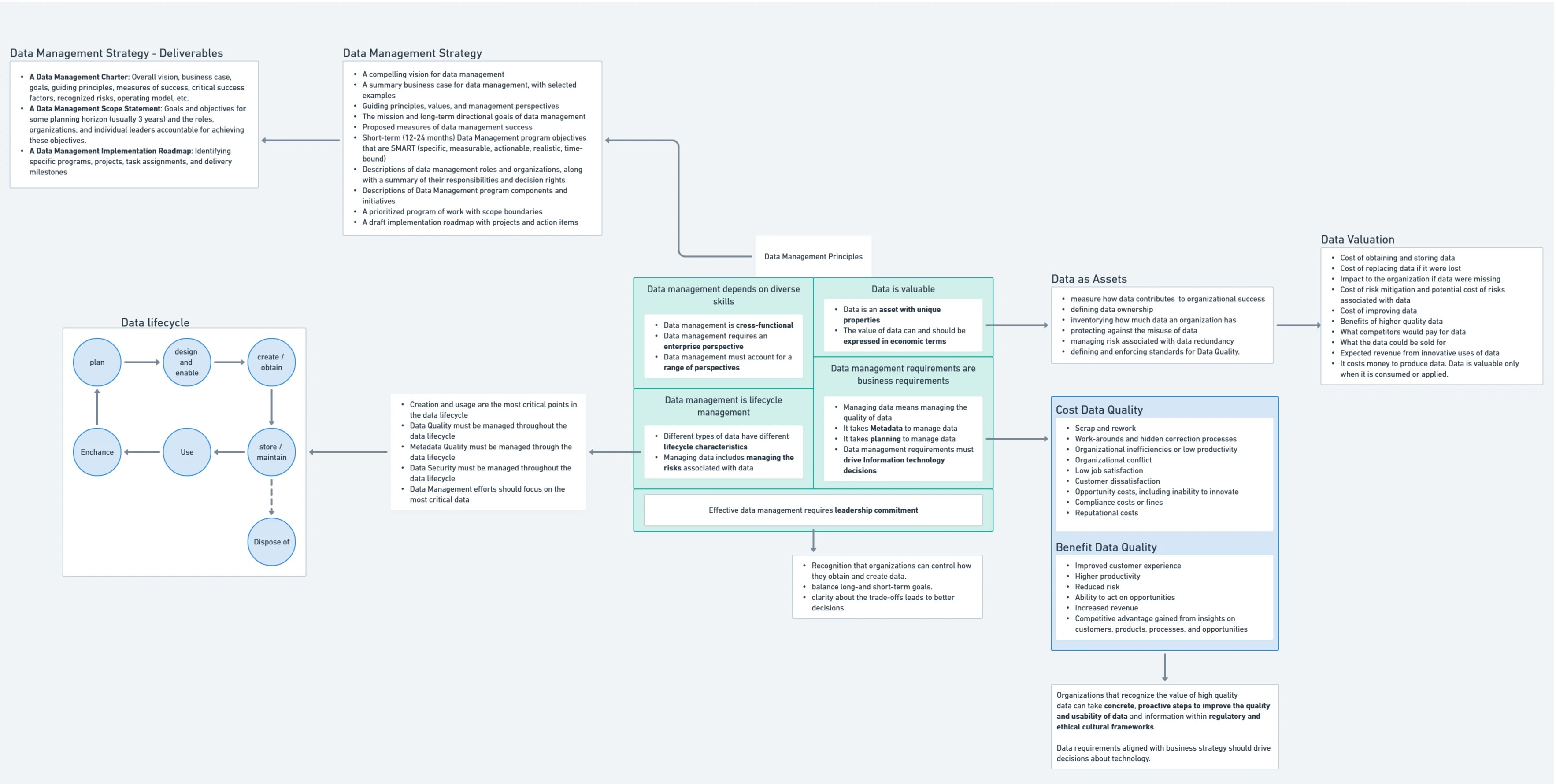
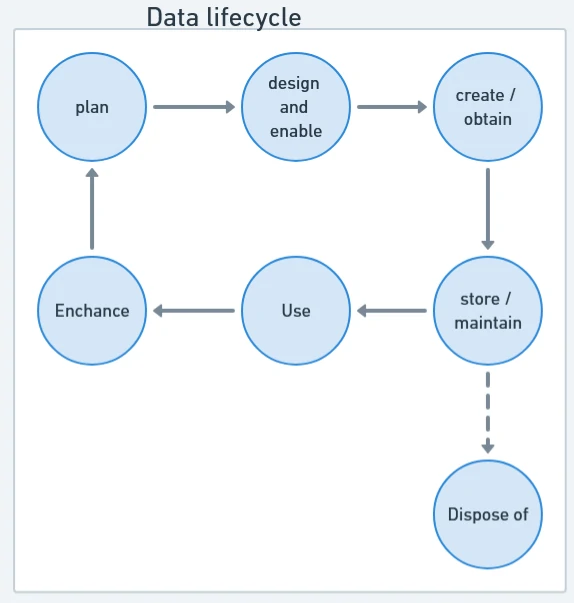
Data management is not a single discipline—it is an organized practice that integrates technical precision, governance, and operational intent. It recognizes that data is a core business asset, not an IT byproduct. Managing data means managing its entire lifecycle: creation, storage, transformation, use, and retirement. Each stage requires accountability, consistency, and alignment with the organization’s operational and strategic objectives. Without structure, data becomes noise; without discipline, it loses trust and value.
Effective data management depends on diverse skills across analytics, engineering, governance, and leadership. It is both a technical and cultural function that demands sustained commitment from decision-makers. Business requirements define what data management must achieve, not the other way around. A sound strategy ensures data supports every critical process with clarity, integrity, and reliability. Leadership must drive this commitment—because no technology or framework can compensate for the absence of direction and ownership.
Data is valuable
- Data is an asset with unique properties.
- The value of data can and should be expressed in economic terms.
Data as Assets
- Measure how data contributes to organizational success
- Defining data ownership
- Inventorying how much data an organization has
- Protecting against the misuse of data
- Managing risk associated with data redundancy
- Defining and enforcing standards for Data Quality.
Data Valuation
- Cost of obtaining and storing data
- Cost of replacing data if it were lost
- Impact to the organization if data were missing
- Cost of risk mitigation and potential cost of risks associated with data
- Cost of improving data
- Benefits of higher quality data
- What competitors would pay for data
- What the data could be sold for
- Expected revenue from innovative uses of data
- It costs money to produce data. Data is valuable only when
- it is consumed or applied.
Data management depends on diverse skills
- Data management is cross-functional.
- Data management requires an enterprise perspective.
- Data management must account for a range of perspectives.
Data management requirements are business requirements
- Managing data means managing the quality of data.
- It takes Metadata to manage data.
- It takes planning to manage data.
- Data management requirements must drive Information technology decisions
Cost Data Quality
- Scrap and rework.
- Work-arounds and hidden correction processes.
- Organizational inefficiencies or low productivity.
- Organizational conflict.
- Low job satisfaction.
- Customer dissatisfaction.
- Opportunity costs, including inability to innovate.
- Compliance costs or fines.
- Reputational costs.
Benefit Data Quality
- Improved customer experience.
- Higher productivity.
- Reduced risk.
- Ability to act on opportunities.
- Increased revenue.
- Competitive advantage gained from insights on customers, products, processes, and opportunities.
Organizations that recognize the value of high quality data can take concrete, proactive steps to improve the quality and usability of data and information within regulatory and ethical cultural frameworks.
Data requirements aligned with business strategy should drive decisions about technology.
Data management is lifecycle management
- Different types of data have different lifecycle characteristics.
- Managing data includes managing the risks associated with data.
principles
- Creation and usage are the most critical points in the data lifecycle.
- Data Quality must be managed throughout the data lifecycle.
- Metadata Quality must be managed through the data lifecycle.
- Data Security must be managed throughout the data lifecycle.
- Data Management efforts should focus on the most critical data.
Effective data management requires leadership commitment
- Recognition that organizations can control how they obtain and create data.
- Balance long-and short-term goals.
- Clarity about the trade-offs leads to better decisions.
Data Management Strategy
- A compelling vision for data management.
- A summary business case for data management, with selected examples.
- Guiding principles, values, and management perspectives.
- The mission and long-term directional goals of data management.
- Proposed measures of data management success.
- Short-term (12-24 months) Data Management program objectives that are SMART (specific, measurable, actionable, realistic, time-bound).
- Descriptions of data management roles and organizations, along with a summary of their responsibilities and decision rights.
- Descriptions of Data Management program components and initiatives.
- A prioritized program of work with scope boundaries.
- A draft implementation roadmap with projects and action items.
Data Management Strategy - Deliverables
- A Data Management Charter: Overall vision, business case, goals, guiding principles, measures of success, critical success factors, recognized risks, operating model, etc.
- A Data Management Scope Statement: Goals and objectives for some planning horizon (usually 3 years) and the roles, organizations, and individual leaders accountable for achieving these objectives.
- A Data Management Implementation Roadmap: Identifying specific programs, projects, task assignments, and delivery milestones.